What YFC is Doing

Slovakia YFC’s team is engaged in reaching its youth with the Gospel through the following:

  • clubs
  • coffee bars
  • a youth center
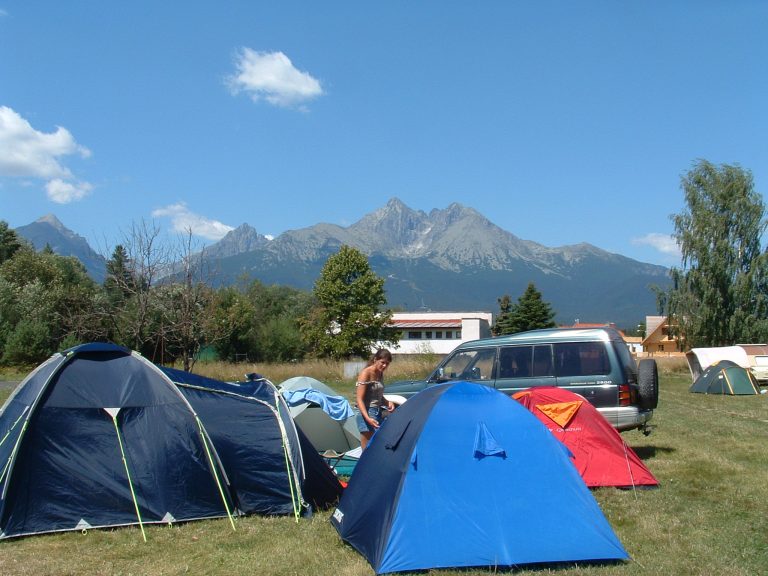
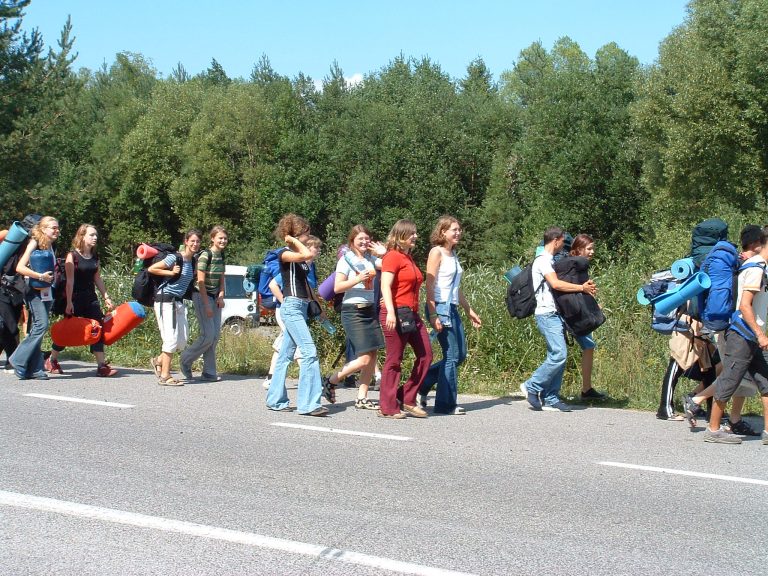
  • camps (see video below)
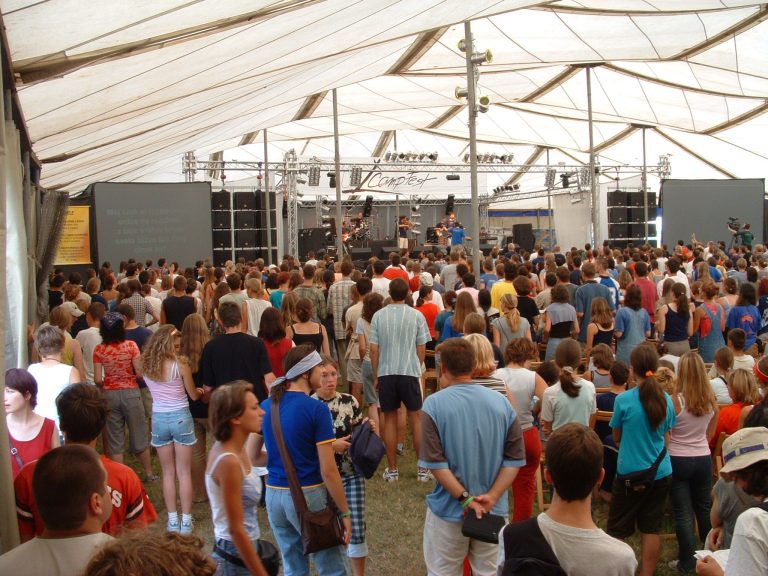
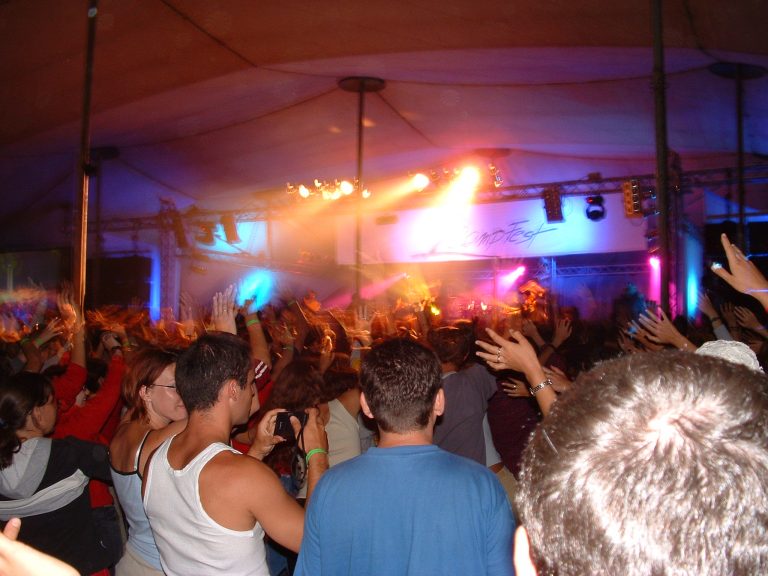
  • festivals
  • dance and sound studio ministries and music events, some of which are done in partnership with other organizations.

Prayer Needs

  • Adequate funding for staff, programs, and necessary equipment.
  • Spiritual development and encouragement of staff and volunteers.
  • Open doors for networking with organizations, churches, and individuals.
  • Increased funding for the land and new youth center building.
  • Unification of Christians in encouraging the revival of young Slovaks.
About Slovakia

Slovakia

Map of Slovakia

Introduction

The dissolution of the Austro-Hungarian Empire at the close of World War I allowed the Slovaks to join the closely related Czechs to form Czechoslovakia. Following the chaos of World War II, Czechoslovakia became a Communist nation within Soviet-dominated Eastern Europe. Soviet influence collapsed in 1989 and Czechoslovakia once more became free. The Slovaks and the Czechs agreed to separate peacefully on 1 January 1993. Slovakia joined both NATO and the EU in the spring of 2004 and the euro area on 1 January 2009.

Geography

Location

Location: Central Europe, south of Poland
Geographic Coordinates: 48 40 N, 19 30 E

Area

Total Area: 49,035 sq km Rank: 130
Land Area: 48,105 sq km
Water Area: 930 sq km
Comparison: about twice the size of New Hampshire
Land Boundaries: 1,474 km
Bordering Countries: Austria 91 km, Czech Republic 197 km, Hungary 676 km, Poland 420 km, Ukraine 90 km
Coastline: 0 km (landlocked)

Climate

temperate; cool summers; cold, cloudy, humid winters

Terrain

rugged mountains in the central and northern part and lowlands in the south

Elevations

Lowest Point: Bodrok River 94 m
Highest Point: Gerlachovsky Stit 2,655 m

Natural Resources

brown coal and lignite; small amounts of iron ore, copper and manganese ore; salt; arable land

Land Use

Arable land: 29.23%
Permanent Crops: 2.67%
Other: 68.1% (2005)
Irrigated Land: 1,830 sq km (2003)
Renewable Water Resources: 50.1 cu km (2003)
Total Freshwater withdrawal (domestic/industrial/agricultural): 1.04
Freshwater Withdrawal Per Capita: 193 cu m/yr (2003)

Environment

Natural Hazards: NA
Environmental Issues: air pollution from metallurgical plants presents human health risks; acid rain damaging forests
Environmental Agreements: Party to: Air Pollution, Air Pollution-Nitrogen Oxides, Air Pollution-Persistent Organic Pollutants, Air Pollution-Sulfur 85, Air Pollution-Sulfur 94, Air Pollution-Volatile Organic Compounds, Antarctic Treaty, Biodiversity, Climate Change, Climate Change-Kyoto Protocol, Desertification, Endangered Species, Environmental Modification, Hazardous Wastes, Law of the Sea, Ozone Layer Protection, Ship Pollution, Wetlands, Whaling

Geography Notes

landlocked; most of the country is rugged and mountainous; the Tatra Mountains in the north are interspersed with many scenic lakes and valleys

People

Population: 5,463,046 (July 2010 est.) Rank: 110

Age Structure

0-14 years: 15.8% (male 442,168/female 422,055)
15-64 years: 71.7% (male 1,952,527/female 1,965,646)
65 years and over: 12.5% (male 254,510/female 426,140) (2010 est.)
Median Age: 35.7 years

Population Growth

Growth Rate: 0.137% (2010 est.) Rank: 187
Birth Rate: 10.6 births/1,000 population (2010 est.) Rank: 183
Death Rate: 9.53 deaths/1,000 population (July 2010 est.) Rank: 70
Net Migration Rate: 0.3 migrant(s)/1,000 population (2010 est.) Rank: 67

Urbanization

Urban Population: 56% of total population (2008)
Rate of Urbanization: 0.2% annual rate of change (2005-10 est.)

Life and Death

Infant Mortality Rate: 6.84 deaths/1,000 live births Rank: 172
Life Expectancy at Birth: 75.4 years Rank: 79
Fertility Rate: 1.36 children born/woman (2010 est.) Rank: 204

Health and Disease

HIV/AIDS - Adult Prevalence Rate: less than 0.1% (2007 est.) Rank: 159
People living with HIV/AIDS: fewer than 200 (2007 est.) Rank: 158
HIV/AIDS Deaths: fewer than 100 (2001 est.) Rank: 132

Nationality and Culture

Noun: Slovak(s)
Adjective: Slovak
Ethnic Groups: Slovak 85.8%, Hungarian 9.7%, Roma 1.7%, Ruthenian/Ukrainian 1%, other and unspecified 1.8% (2001 census)
Religion: Roman Catholic 68.9%, Protestant 10.8%, Greek Catholic 4.1%, other or unspecified 3.2%, none 13% (2001 census)
Languages: Slovak (official) 83.9%, Hungarian 10.7%, Roma 1.8%, Ukrainian 1%, other or unspecified 2.6% (2001 census)

Education

Literacy (Meaning, age 15 and over can read and write): 99.6% Male: 99.7% Female: 99.6% (2004)
School life expectancy (primary to tertiary education): 15 years Male: 14 years Female: 15 years (2006)
Education expenditures: 3.9% of GDP (2005) Rank: 111

Government

Country Name

Conventional Long Form: Slovak Republic
Conventional Short Form: Slovakia
Local Long Form: Slovenska Republika
Local Short Form: Slovensko
Government Type: parliamentary democracy
Capital: Bratislava Geographic Coordinates: 48 09 N, 17 07 E

Administrative divisions

8 regions (kraje, singular - kraj); Banskobystricky, Bratislavsky, Kosicky, Nitriansky, Presovsky, Trenciansky, Trnavsky, Zilinsky
Independence: 1 January 1993 (Czechoslovakia split into the Czech Republic and Slovakia)
National holiday: Constitution Day, 1 September (1992)
ratified 1 September 1992, effective 1 January 1993; changed in September 1998; amended February 2001
note: the change in September 1998 allowed direct election of the president; the amendment of February 2001 allowed Slovakia to apply for NATO and EU membership
Legal system: civil law system based on Austro-Hungarian codes; accepts compulsory ICJ jurisdiction with reservations; legal code modified to comply with the obligations of Organization on Security and Cooperation in Europe (OSCE) and to expunge Marxist-Leninist legal theory
Suffrage: 18 years of age; universal

Executive Branch

Chief of State: President Ivan GASPAROVIC (since 15 June 2004)
Head of Government: Prime Minister Iveta RADICOVA (since 8 July 2010); Deputy Prime Ministers Jan FIGEL, Ivan MIKLOS, Jozef MIHAL, Rudolf CHMEL (since 9 July 2010)
Cabinet: Cabinet appointed by the president on the recommendation of the prime minister
Elections: president elected by popular vote for a five-year term (eligible for a second term); election last held on 21 March and 4 April 2009 (next to be held no later than April 2014); following National Council elections, the leader of the majority party or the leader of a majority coalition usually appointed prime minister by the president
Election Results: Ivan GASPAROVIC reelected president in runoff; percent of vote - Ivan GASPAROVIC 55.5%, Iveta RADICOVA 44.5%

Legislative Branch

unicameral National Council of the Slovak Republic or Narodna Rada Slovenskej Republiky (150 seats; members elected on the basis of proportional representation to serve four-year terms)
Elections: last held on 12 June 2010 (next to be held in June 2014)
Election Results: percent of vote by party - Smer 34.8%, SDKU-DS 15.2%, SaS 12.1%, KDH 8.5%, Most-Hid 8.1%, SNS 5.1%, other 16.2%; seats by party - Smer 62, SDKU-DS 28, SaS 22, KDH 15, Most-Hid 14, SNS 9

Judicial branch

Supreme Court (judges are elected by the National Council); Constitutional Court (judges appointed by president from group of nominees approved by the National Council); Special Court (judges elected by a council of judges and appointed by president)
parties in the Parliament:: Bridge or Most-Hid [Bela BUGAR]; Christian Democratic Movement or KDH [Jan FIGEL]; Direction-Social Democracy or Smer-SD [Robert FICO]; Freedom and Solidarity or SaS [Richard SULIK]; Slovak Democratic and Christian Union-Democratic Party or SDKU-DS [Mikulas DZURINDA]; Slovak National Party or SNS [Jan SLOTA]
selected parties outside the Parliament:: Alliance for a Europe of Nations or AZEN [Milan URBANI]; Civic Conservative Party or OKS [Peter ZAJAC]; Green Party or SZ [Peter PILINSKY]; Party of the Democratic Left or SDL [Marek BLAHA]; Party of the Hungarian Coalition or SMK [Pal CSAKY]; People's Party - Movement for a Democratic Slovakia or LS-HZDS [Vladimir MECIAR]; People's Party - Our Slovakia or SLS [Jozef SASIK]; Slovak Communist Party or KSS [Jozef HRDLICKA]; Slovenska Pospolitost [Marian KOTLEBA]; Union of the Workers of Slovakia or ZRS [Jan LUPTAK]; Union - Party for Slovakia or Unia [Milan CELIK]
Political Pressure Groups and Leaders: Association of Towns and Villages or ZMOS; Confederation of Trade Unions or KOZ; Entrepreneurs Association of Slovakia or ZPS; Federation of Employers' Associations of the Slovak Republic; National Union of Employers or RUZ; Slovak Chamber of Commerce and Industry or SOPK; The Business Alliance of Slovakia or PAS
International Organization Participation: Australia Group, BIS, BSEC (observer), CBSS (observer), CE, CEI, CERN, EAPC, EBRD, EIB, EU, FAO, IAEA, IBRD, ICAO, ICC, ICCt, ICRM, IDA, IEA, IFC, IFRCS, ILO, IMF, IMO, IMSO, Interpol, IOC, IOM, IPU, ISO, ITU, ITUC, MIGA, NATO, NEA, NSG, OAS (observer), OECD, OIF (observer), OPCW, OSCE, PCA, Schengen Convention, SECI (observer), UN, UNCTAD, UNESCO, UNFICYP, UNIDO, UNTSO, UNWTO, UPU, WCO, WFTU, WHO, WIPO, WMO, WTO, ZC
Flag Description: three equal horizontal bands of white (top), blue, and red derive from the pan-Slavic colors; the Slovakian coat of arms (consisting of a red shield bordered in white and bearing a white Cross of Lorraine surmounting three blue hills) is centered over the bands but offset slightly to the hoist side

Economy

Economy Overview: Slovakia has made significant economic reforms since its separation from the Czech Republic in 1993. Reforms to the taxation, healthcare, pension, and social welfare systems helped Slovakia to consolidate its budget and get on track to join the EU in 2004 and to adopt the euro in January 2009. Major privatizations are nearly complete, the banking sector is almost entirely in foreign hands, and the government has helped facilitate a foreign investment boom with business friendly policies such as labor market liberalization and a 19% flat tax. Foreign investment in the automotive and electronic sectors has been strong. Slovakia's economic growth exceeded expectations in 2001-08 despite the general European slowdown. Unemployment, at an unacceptable 18% in 2003-04, dropped to 7.7% in 2008 but remains the economy's Achilles heel. Despite its 2006 pre-election promises to loosen fiscal policy and reverse the previous DZURINDA government's pro-market reforms, FICO's cabinet has thus far been careful to keep a lid on spending in order to meet euro adoption criteria and has focused on regulating energy and food prices instead. To maintain a stable operating environment for investors, the European Bank for Reconstruction and Development advised the Slovak government to refrain from intervening in important sectors of the economy. However, Bratislava's approach to mitigating the economic slowdown includes substantial government intervention and the option to nationalize strategic companies. GDP fell nearly 5% in 2009 and unemployment rose above 12%, as the global recession impacted many segments of the economy.

Gross Domestic Product

GDP (purchasing power parity): $115.1 billion (2009 est.) Rank: 62
GDP - real growth rate: -4.7% (2009 est.) Rank: 182
GDP - per capita (PPP): $21,100 (2009 est.) Rank: 58
GDP - Composition by Sector: Agriculture: 2.6% Industry: 34.4% Services: 63%

Labor Force

Labor Force: 2.641 million (2009 est.) Rank: 108
Labor force - by occupation: Agriculture: 3.5% Industry: 27% Services: 69.4% (December 2009)
Unemployment Rate: 11.4% (2009) Rank: 125

Poverty

Population below poverty line: 21% (2002)
country comparison to the world: 108
4.25% (31 December 2007)
note: this is the European Central Bank's rate on the marginal lending facility, which offers overnight credit to banks from the euro area; as of 1 January 2009 Slovakia became a member of the Economic and Monetary Union (EMU)
country comparison to the world: 62
$1.901 billion (31 December 2008 est.)

Transnational Issues

International Disputes: bilateral government, legal, technical and economic working group negotiations continued in 2006 between Slovakia and Hungary over Hungary's completion of its portion of the Gabcikovo-Nagymaros hydroelectric dam project along the Danube; as a member state that forms part of the EU's external border, Slovakia has implemented the strict Schengen border rules

Want to know more? Show Full Profile